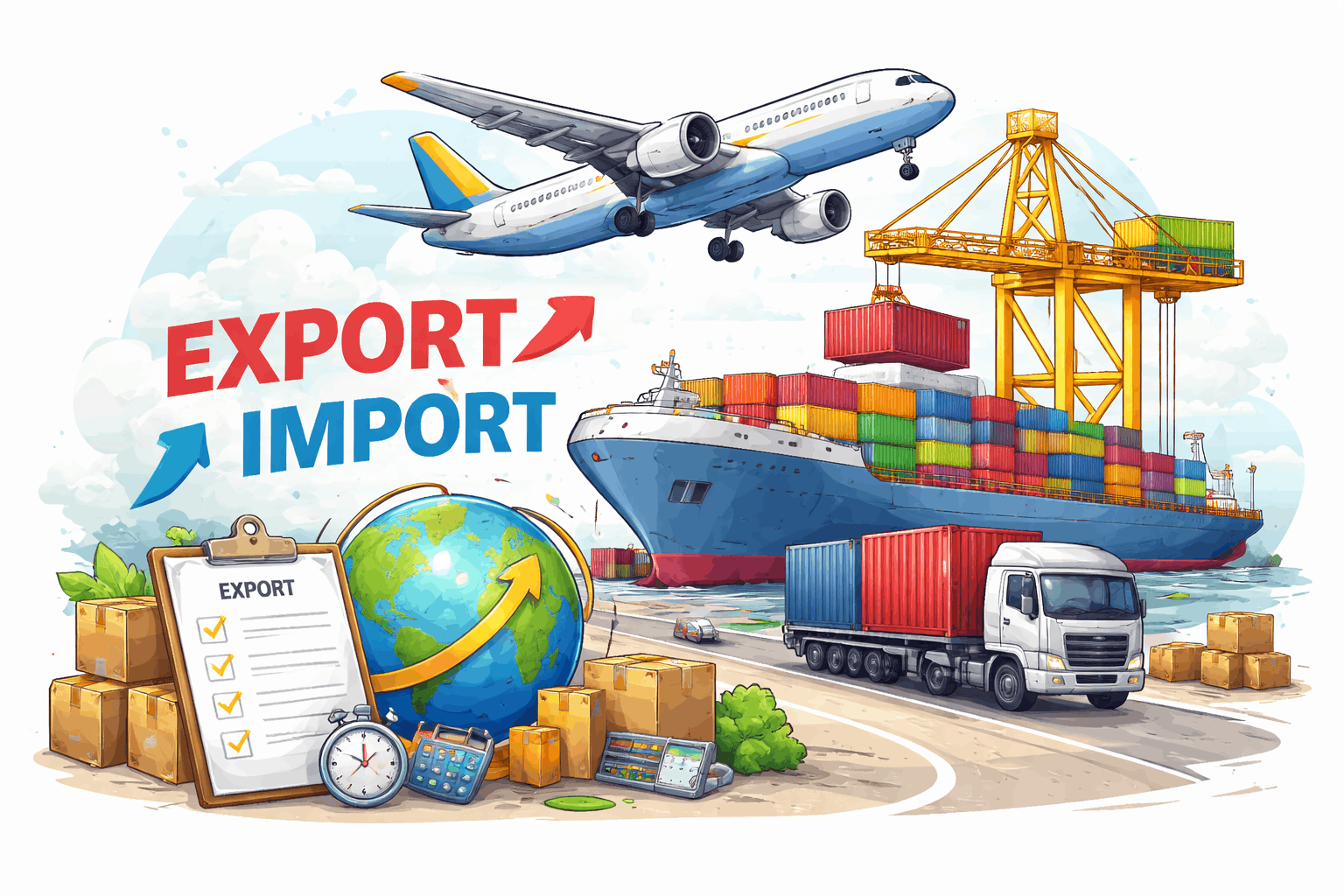
Splendid Industries: Dynamics of Export and Import in a Globalized Economy
In an era defined by unprecedented interconnectedness, industries that engage in international trade occupy a pivotal role in shaping economic landscapes, technological diffusion, and societal welfare. "Splendid industries"—those characterized by strong competitive advantages, innovative capacity, and significant contributions to employment and GDP—serve as bellwethers for a country's economic health. Their activities in export and import not only influence national balance of payments but also determine the strategic positioning of economies within global value chains. This essay examines the multifaceted roles of exports and imports for splendid industries, analyzes the forces that shape international trade flows, explores policy and business strategies that reinforce industrial competitiveness, and assesses the risks and opportunities that characterize contemporary global trade.
I. The Strategic Importance of Exports for Splendid Industries
A. Revenue Growth and Market Diversification Exports expand market reach beyond domestic demand constraints, enabling firms in splendid industries to realize economies of scale, increase production efficiency, and diversify revenue streams. By accessing international customers, firms reduce vulnerability to local economic cycles and seasonal fluctuations. For capital-intensive or innovation-driven sectors—such as advanced manufacturing, pharmaceuticals, aerospace, and high-technology services—exports are often essential to recoup research and development (R&D) investments and to maintain robust profit margins.
B. Innovation Diffusion and Learning-by-Exporting Engagement with foreign markets accelerates knowledge acquisition. Exporters face heterogeneous customer requirements and regulatory standards, compelling them to upgrade product quality, adopt new technologies, and refine management practices. The "learning-by-exporting" effect fosters continuous innovation within splendid industries, spurring process improvements and product differentiation that reinforce competitive advantage both abroad and at home.
C. Global Value Chain Integration Modern production is frequently organized across borders in global value chains (GVCs). Splendid industries that serve as upstream suppliers or downstream integrators secure strategic positions within GVCs through exports of intermediate goods, components, and specialized services. Participation in these networks enhances access to foreign inputs, specialized know-how, and broader markets—catalyzing productivity gains and enabling firms to move into higher value-added activities over time.
D. Macro-Economic Contributions At the national level, exports from splendid industries generate foreign exchange earnings, support employment, and contribute to fiscal revenues. A robust export sector can help ameliorate trade deficits, stabilize currency valuations, and underpin creditworthiness. Moreover, industry clusters that achieve export success often attract ancillary businesses, stimulating regional development and promoting urban agglomeration economies.
II. The Role of Imports for Industrial Competitiveness
A. Access to Advanced Inputs and Technologies Imports enable splendid industries to acquire critical inputs—ranging from raw materials and intermediate goods to capital equipment and cutting-edge technologies—not readily available domestically. These imported inputs can enhance production capabilities, raise quality standards, and shorten innovation cycles. Particularly in sectors with high technological intensity, timely access to foreign machinery, software, and specialized components is indispensable for maintaining global competitiveness.
B. Cost Efficiency and Specialization Importing intermediate goods can lower production costs by allowing firms to exploit comparative advantages across countries. By sourcing competitively priced inputs or specialized services from abroad, splendid industries can focus on core competencies and higher value-added activities, thereby optimizing resource allocation and improving overall efficiency.
C. Competitive Discipline and Market Signals Imports introduce competition that disciplines domestic producers to improve productivity and innovate. Exposure to foreign goods and services encourages domestic firms to benchmark performance, reduce inefficiencies, and elevate customer service. Moreover, import patterns convey market signals about global demand trends and technology trajectories, informing strategic decisions on product development and investment.
D. Risks of Over-Reliance and Industrial Vulnerabilities While imports offer significant benefits, excessive dependence on foreign suppliers—especially for critical inputs—can create vulnerabilities. Supply chain disruptions, geopolitical tensions, and trade restrictions can impede access to essential components, leading to production bottlenecks. Splendid industries must therefore balance openness with strategic resilience, including supplier diversification, inventory strategies, and investments in domestic capabilities where feasible.
III. Forces Shaping Export and Import Patterns
A. Comparative Advantage and Factor Endowments Classical and modern trade theories posit that countries specialize based on comparative advantages derived from factor endowments—labor, capital, natural resources—or from dynamic capabilities like technological expertise. Splendid industries emerge where these endowments align with firm-level skills, institutional support, and infrastructure.
B. Technological Change and Digitalization Technological advances, especially in information and communications technology, have transformed trade by lowering coordination costs, enabling servitization of manufacturing, and facilitating cross-border data flows. Digital platforms and advanced logistics have expanded market reach for mid-sized firms, allowing more industries to participate in international trade.
C. Trade Policy and Institutional Frameworks Tariffs, non-tariff barriers, bilateral and multilateral trade agreements, and customs procedures shape the attractiveness of markets and the feasibility of cross-border operations. Coherent industrial policies that combine trade facilitation, export promotion, standards harmonization, and investment incentives can significantly enhance the export performance of splendid industries.
D. Exchange Rates and Macroeconomic Stability Currency valuation affects price competitiveness. Competitive exchange rates can boost export demand, while volatile or overvalued currencies may undermine profitability. Macroeconomic stability—low inflation, sound public finances, and predictable monetary policy—creates a favorable environment for firms to plan long-term export strategies.
E. Geopolitical Dynamics and Security Considerations Geopolitical shifts influence market access, supply chain reliability, and the regulatory environment. Export controls, sanctions, and strategic decoupling trends can constrain market options for firms operating in sensitive sectors (e.g., semiconductors, defense-related technologies), necessitating adaptive strategies and contingency planning.
IV. Policy Instruments to Support Splendid Industries in Trade
A. Export Promotion and Market Development Public agencies can facilitate market entry through trade missions, industry delegations, market intelligence, and matchmaking services. Financial instruments—such as export credits, insurance, and grants for trade development—reduce market entry costs and mitigate risks associated with new markets.
B. Investment in Human Capital and R&D Sustained investment in education, vocational training, and R&D enhances the talent pipeline and fosters innovation ecosystems. Public-private partnerships, research grants, and tax incentives for R&D encourage firms to pursue high-value exports and to climb the technological ladder.
C. Infrastructure and Logistics Efficient transportation networks, modern ports, streamlined customs processes, and digital trade platforms reduce transaction costs and delivery times. Strategic infrastructure investments align production locations with global shipping routes and distribution hubs, amplifying export competitiveness.
D. Trade Facilitation and Regulatory Harmonization Streamlining regulatory procedures, adopting international standards, and reducing non-tariff barriers ease cross-border trade. Harmonization of regulatory frameworks—particularly in areas like product safety, environmental standards, and intellectual property—lowers compliance costs and expands market access.
E. Resilience Policies and Strategic Stockpiling To address supply chain vulnerabilities, governments can support diversification of suppliers, strategic stockpiling of critical inputs, and domestic capacity building for essential goods. Targeted subsidies or public investments in critical sectors can provide temporary buffers while firms adapt.
V. Corporate Strategies for Export and Import Excellence
A. Market Research and Localization Successful exporters invest in deep market research to understand customer preferences, regulatory requirements, and competitive landscapes. Localization of products, marketing strategies, and after-sales services builds trust and sustains long-term market presence.
B. Strategic Partnerships and Alliances Joint ventures, licensing agreements, and strategic alliances with local partners facilitate market entry, reduce cultural and regulatory friction, and leverage established distribution networks. Such collaborations are especially valuable in complex or regulated markets.
C. Supply Chain Optimization and Risk Management Firms must design supply chains that balance cost efficiency with resilience. Supplier diversification, multi-sourcing strategies, flexible manufacturing arrangements, and investment in supply chain visibility tools minimize disruptions and allow rapid recovery from shocks.
D. Upgrading within Global Value Chains Moving up the value chain—from low-margin assembly to design, branding, and service provision—requires sustained investment in capabilities, intellectual property protection, and access to finance. Firms that successfully upgrade capture a larger share of value and enhance their export returns.
E. Sustainable and Responsible Trade Practices Environmental, social, and governance (ESG) considerations increasingly shape buyer preferences and regulatory requirements. Adopting sustainable production, reducing carbon footprints, and ensuring ethical labor practices can be a differentiator in international markets and reduce exposure to regulatory risks.
VI. Case Studies and Illustrations (Select Examples)
A. High-Technology Manufacturing Countries that nurtured strong engineering talent, cluster development, and supportive policy environments—such as Germany's Mittelstand or South Korea's electronics and automotive sectors—demonstrate how targeted investments in skills and innovation translate into sustained export leadership. These industries exemplify strong integration into GVCs and continuous product upgrading.
B. Pharmaceuticals and Biotechnology Export success in pharmaceuticals often hinges on robust R&D ecosystems, regulatory competence, and stringent quality standards. Nations with coordinated public health policies, strong intellectual property regimes, and deep clinical research networks can convert scientific breakthroughs into significant export revenues.
C. Agribusiness and Food Processing Agricultural exporters that combine efficient logistics, cold-chain infrastructure, and adherence to sanitary and phytosanitary standards command premium markets. Value addition through processing and branding elevates export earnings beyond raw commodity exports.
D. Services and Digital Exports The rise of professional services, software development, and creative industries highlights how intangible exports can generate substantial foreign exchange with relatively low physical infrastructure costs. Supportive digital infrastructure and talent pools are critical enablers.
VII. Risks, Externalities, and Ethical Considerations
A. Environmental Impacts and Resource Constraints Export-oriented industrial expansion can impose environmental costs—resource depletion, pollution, and carbon emissions. Sustainable resource management and adherence to environmental standards must be incorporated into export strategies to avoid reputational damage and regulatory backlash.
B. Labor Rights and Social Equity Rapid industrialization driven by export demand can strain labor markets and lead to exploitative practices if not properly regulated. Ensuring fair labor standards, occupational safety, and equitable distribution of gains is essential to maintain social license and long-term sector viability.
C. Economic Dependence and Dutch Disease Over-reliance on a narrow set of exports, particularly commodities, can expose economies to price volatility and crowd out other productive sectors—a phenomenon known as Dutch disease. Diversification strategies are vital to mitigate these macroeconomic risks.
D. Intellectual Property and Technology Transfer Balancing technology transfer and protection of intellectual property poses complex challenges. While openness can facilitate learning and development, inadequate IP protection may deter investment in high-tech industries. Policymakers must strike a nuanced balance that fosters both innovation and diffusion.
Great Technology
Embracing Digital Transformation Digitalization will continue to reshape trade patterns. Splendid industries must invest in digital capabilities—automation, data analytics, cybersecurity, and e-commerce—to remain competitive and to exploit new service-driven export opportunities.
Delivery On Time
Green Transition and Circular Economy Global demand is increasingly tilting toward low-carbon and circular economy solutions. Industries that pioneer sustainable technologies and business models can capture emerging markets and align with evolving regulatory frameworks and consumer preferences.
Certified Engineers
Regionalization and Nearshoring Trends Geopolitical uncertainties and supply chain disruptions have prompted some degree of regionalization and nearshoring. While globalization is not reversing wholesale, firms will increasingly adopt hybrid strategies that combine global sourcing with strategic regional supply bases to enhance resilience.
Best Branding
Inclusive Growth and Shared Prosperity To ensure that export-led growth translates into broad-based development, policymakers must integrate trade policies with social investments—education, healthcare, and infrastructure. Inclusive growth enhances social stability and sustains demand for domestic and exported goods.

Planning & Strategy
Exports and imports are twin pillars on which the success of splendid industries rests. Exports drive revenue growth, innovation, and global integration; imports supply critical inputs, foster competitive discipline, and enable specialization. Together they form a feedback loop that influences firm strategy, national policy, and the structure of global production. To harness the benefits while managing attendant risks, a coherent combination of corporate strategy and public policy is essential—one that emphasizes innovation, infrastructure, human capital, regulatory clarity, sustainability, and resilience. In an increasingly complex and competitive world, splendid industries that adeptly manage their export and import activities will be best positioned to secure enduring prosperity and to contribute meaningfully to national development and global progress.